June 11, 2026
June 11, 2026
If you want a downtown lifestyle in Montrose, you are not limited to a simple apartment-over-storefront picture. Downtown Montrose offers a historic Main Street setting, a mix of housing and commercial spaces, and nearby flexible property options that can support how you want to live and work. If you are exploring owner-occupier space, investment potential, or a walkable in-town setup, this overview will help you understand what downtown really offers and what you need to verify before you make a move. Let’s dive in.
Downtown Montrose is the city’s historic core and Main Street district. The city’s comprehensive plan describes it as a corridor along Main Street east and west of Townsend Avenue, with traditional historic two-story buildings that include local shops, restaurants, offices, and housing.
That pattern gives downtown a mixed-use feel that is different from newer, auto-oriented development. You will also find on-street parking along Main Street, plus free parking lots a block or two north and south, which helps support day-to-day convenience in the core.
West Main Street adds another layer to the downtown experience. The city describes this half-mile stretch as part of Montrose’s urban core, serving as key frontage for nearby businesses and linking downtown to surrounding residential areas and the Uncompahgre Riverway Trail and West Main Trailhead.
In 2025, the city completed a West Main revitalization project that improved streetscape features and pedestrian connections. For you, that means downtown is not just historic in character. It is also being actively improved for people who want to move through the area on foot and stay connected to nearby amenities.
The most important thing to know is that downtown Montrose is best understood as a mixed-use environment, not a place with one standard live-work product. The city’s planning department makes clear that zoning is parcel-specific, and whether a property can support a true live-work arrangement depends on the parcel, zoning district, and permitting path.
That matters if you are thinking beyond a typical home search. A building may fit a live-work lifestyle in practice, but that does not automatically mean it is formally approved for every residential and commercial use combination.
The built form that comes closest to a live-work setup is the historic mixed-use building pattern already common downtown. The city highlights historic mixed-use buildings on Main Street and nearby, while the comprehensive plan notes that downtown includes housing alongside shops, restaurants, and offices.
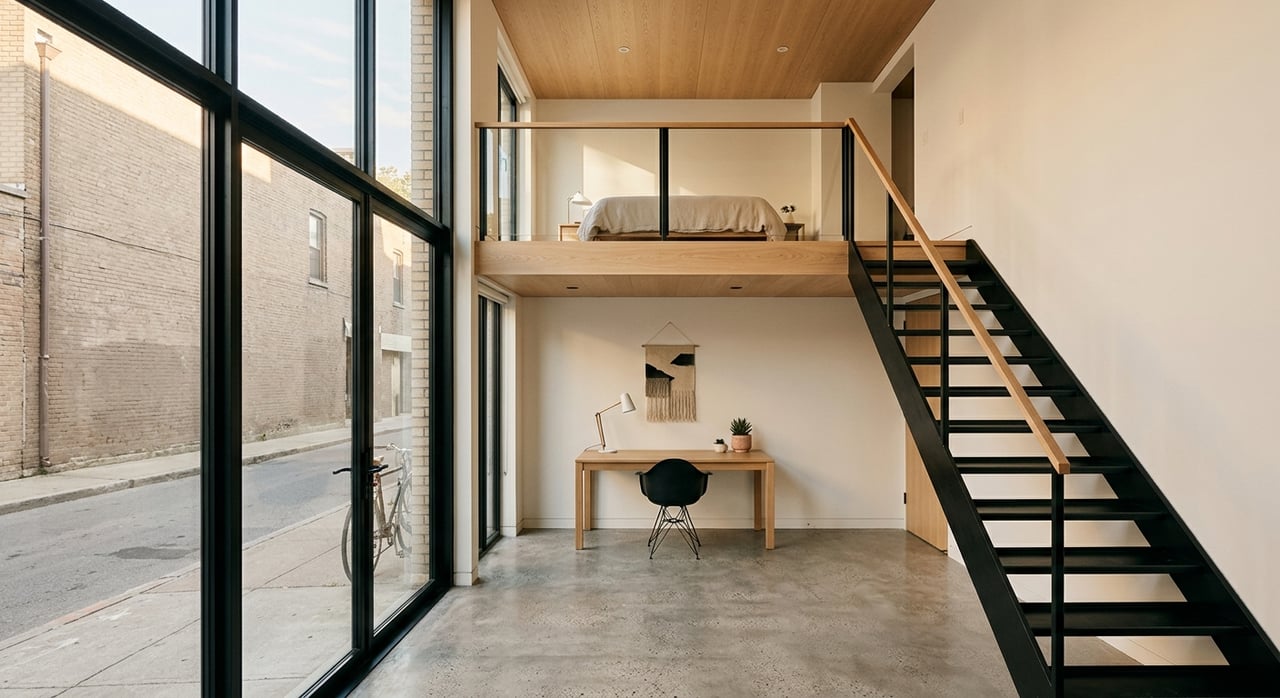
In practical terms, this often supports the idea of upper-floor apartments or loft-style living above street-level commercial space. For owner-occupiers and some investors, that can create a flexible setup where living, working, and daily errands happen within the same few blocks.
Downtown-adjacent housing options also support that lifestyle. Montrose’s pre-approved ADU program includes designs such as The Perch, an over-garage apartment with interior stairs, and The Loft, a flexible plan aimed at remote workers and creative professionals.
The city’s REDO overlay also encourages small-lot residential infill near downtown. It states that qualifying ADUs can receive reduced parking and utility connection costs, which adds another layer of flexibility for certain near-downtown properties.
If you are evaluating a property as live-work space, the safest move is to verify the details early. The city’s planning materials say owners should confirm zoning and permit status through Planning Services rather than assume a property qualifies based on layout or marketing language alone.
That is especially important if you are an owner-occupier, investor, or business buyer trying to match a space to a specific operational need. The concept may fit the building. The legal use still needs to match the parcel.
For many buyers, downtown Montrose works because it supports a practical daily routine. You can find local shops, restaurants, brew pubs, galleries, and public sculptures in and around the core, giving the area steady activity without losing its small-city feel.
The downtown Visitor Center on South Cascade also serves as a useful resource for maps, brochures, souvenirs, and event information. That adds to downtown’s role as a central place for both residents and visitors.
The city’s arts programming is another major draw. The Montrose Art Crawl takes place every second Thursday from May through September and connects galleries, shops, businesses, and public spaces along Main Street.
Downtown and the broader community also feature sculptures and murals that reflect the Uncompahgre Valley. If you value a setting with visible public art and recurring community events, downtown offers more than simple convenience.
A downtown lifestyle works best when it is not just attractive, but functional. In Montrose, city offices are located at 400 East Main Street, and the public safety complex is at 434 South First Street, placing key civic services close to the core.
The city has also installed EV charging in the heart of downtown near North First Street and North Uncompahgre Avenue, plus a free charger near Centennial Plaza. That is a practical feature for drivers who want in-town charging access.
Outdoor access is part of the value too. Montrose says its parks and trails system includes developed parks, trails, open space, and corridor connections, and downtown’s West Main connection links the core to the Uncompahgre Riverway Trail and trailhead.
For you, that means downtown living can support both everyday errands and outdoor time without requiring a major reset in location. That kind of access can matter just as much as square footage.
Downtown Montrose feels walkable in part because the city’s standards support that pattern. Site-development standards for larger retail sites require street-facing facades to include elements like display windows, entry areas, awnings, or similar storefront features.
Those design requirements help reinforce a pedestrian-oriented environment instead of one dominated by blank walls and parking lots. Combined with the historic building stock, that creates a more active street presence along the core commercial corridors.
For buyers and investors, this matters because built form shapes daily experience. A district designed for storefront visibility, connected sidewalks, and active facades tends to support a stronger sense of place than a corridor built mainly around vehicle traffic.
Downtown Montrose is not standing still. The city actively promotes preservation and revitalization of historic downtown buildings, with redevelopment efforts centered on adaptive reuse rather than subdivision-style expansion.
Montrose is described by DART as a Main Street America accredited community, and the city says it is highly motivated to incentivize redevelopment of historic mixed-use properties. That gives downtown a long-term story built around reinvestment in existing buildings and blocks.
The city is also an accredited Certified Local Government, and DART-related programs have generated about $22 million in economic growth over the past decade from roughly $1 million in downtown projects. While every property needs its own analysis, that broader reinvestment context can matter if you are evaluating long-term positioning.
The city also identifies the downtown development area as part of a designated Opportunity Zone. In the comprehensive plan, Montrose is described as the retail center for the area, with residents from neighboring towns coming in to shop and dine.
Citywide, the plan reports 258 retail and restaurant establishments, including 195 retail trade stores and 63 restaurants and bars. That does not mean every downtown property performs the same way, but it does support the idea that Montrose serves a wider regional function.
Downtown Montrose can be a good fit if you want a property that blends lifestyle, utility, and flexibility. That may include buyers looking for historic character, owner-occupiers seeking proximity between home and business activity, or investors interested in a mixed-use setting with ongoing reinvestment.
It may also fit you if walkability matters more than a conventional suburban setup. Access to shops, restaurants, public art, civic services, and trails creates a downtown experience that is compact but layered.
At the same time, not every property will support the same use. If your goal involves a true live-work arrangement, a mixed-use conversion, or a business component tied to residential occupancy, parcel-level diligence is essential.
Before you move forward on a downtown property, it helps to ask a few practical questions:
These are not just technical details. They shape whether a property truly fits your goals, especially if you are balancing personal use, business use, and long-term value.
Downtown Montrose offers a compelling mix of historic character, practical convenience, and flexible property types. If you want help evaluating a downtown opportunity with a clear, valuation-driven approach, the GSD Broker Team can help you assess the fit, the use case, and the bigger picture.
Stay up to date on the latest real estate trends.
Whether you are looking for business acquisitions, commercial investment or your dream home in Mesa County or surrounding areas, we’re here to help you move forward with clarity and confidence.