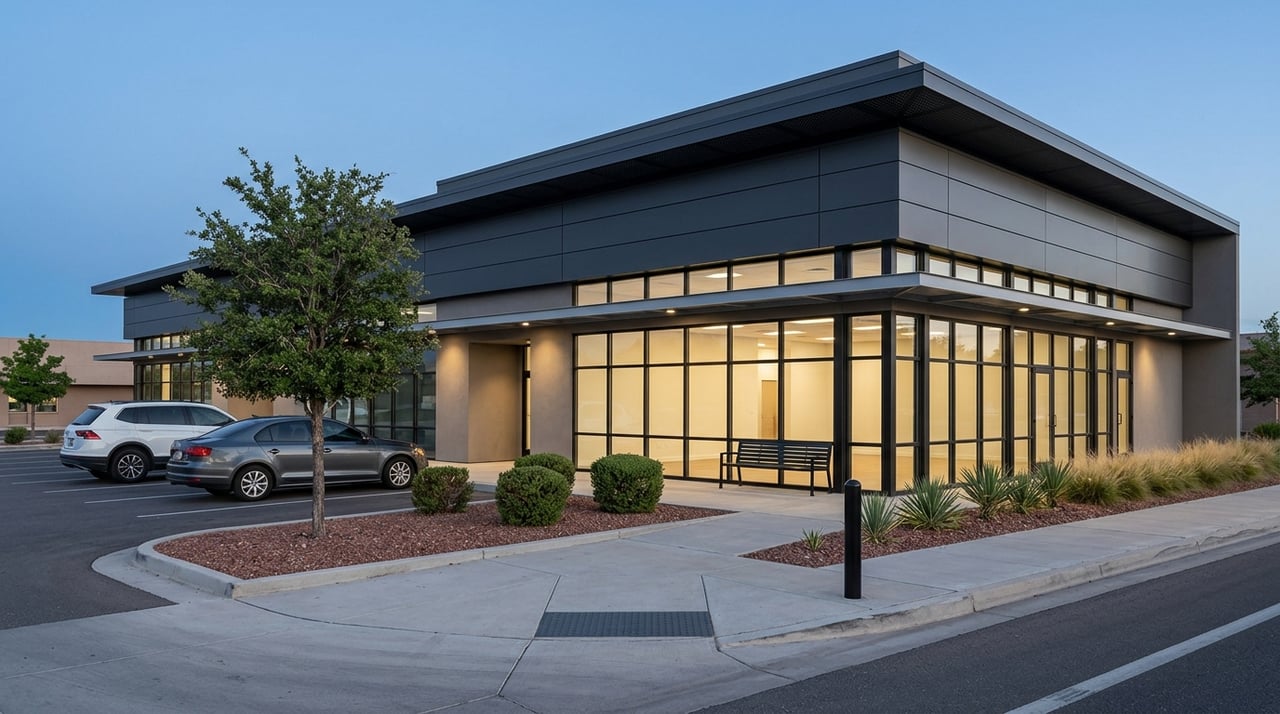
Comparing Grand Junction’s Main Commercial Corridors
June 18, 2026
June 18, 2026
If you are looking at commercial property in Grand Junction, the address matters, but the corridor may matter even more. Two spaces with similar square footage can perform very differently based on visibility, parking, walkability, and how the city wants that street to evolve. This guide breaks down Grand Junction’s main commercial corridors so you can compare them with a clearer, more practical lens. Let’s dive in.
In Grand Junction, the biggest differences between commercial corridors come down to how they balance exposure, access, parking, and surrounding activity. Downtown, North Avenue, Horizon Drive, and Patterson Road each serve a different role in the city.
That means the best location for your business or investment depends on how customers arrive, how long they stay, and what kind of site layout you need. A walk-in retail concept may fit one corridor well, while an owner-occupied office or parking-heavy use may fit another much better.
Downtown is the most walkable and mixed-use corridor in Grand Junction. The planning framework for greater downtown prioritizes economic and cultural activity, downtown living, historic preservation, and stronger transit, bike, and pedestrian connections.
The property mix typically includes smaller storefronts, upper-story commercial or residential space, offices, lodging, restaurants, shops, wellness uses, entertainment, and civic or service uses. It functions more as a destination district than a pass-through commercial strip.
Visibility in downtown comes less from high-speed traffic and more from foot traffic, local repeat visits, and event activity. The area is also shaped by parks, public gathering spaces, arts and culture, and redevelopment efforts tied to connectivity and placemaking.
For buyers and tenants, downtown often makes the most sense when the business depends on walk-in visits, short dwell times, and a strong street presence. It can also work well if you value a mixed-use environment over large parking fields.
North Avenue is Grand Junction’s most traditional highway-commercial corridor, but it is also being pushed toward a more complete-street format. The overlay from First Street to the I-70 Business Loop encourages buildings near the street, reduced setbacks, parking away from the frontage, and main entrances facing North Avenue.
This corridor offers strong drive-by exposure and a true through-corridor feel. It is a state highway under Colorado Department of Transportation jurisdiction, and the city has identified it as a major arterial since the mid-1950s.
CDOT’s 2023 safety assessment lists North Avenue in Grand Junction at 18,000 to 19,000 average annual daily traffic. That volume supports its role as a high-visibility commercial corridor.
At the same time, the corridor is gradually being reshaped to improve pedestrian movement and transit access. City and regional planning work includes detached sidewalks, transit-stop upgrades, and complete-street improvements, with sidewalk work currently pointed toward Fall 2026.
For many users, North Avenue fits businesses that need broad visibility and can operate with tighter on-site parking. Service retail, quick-service food, small professional office, and some medical uses can align well with the corridor’s redevelopment direction.
Horizon Drive serves as Grand Junction’s airport-facing gateway corridor. It sits just off I-70 Exit 31 and next to the regional airport, making it one of the city’s most visible locations for traveler-oriented business activity.
The district includes more than 200 businesses, more than 65% of the city’s lodging, and more than $300 million in annual economic impact. That mix points to a corridor shaped by hotels, traveler services, offices, restaurants, and business-park uses.
The corridor also sees more than 7 million cars annually, according to the district’s 2026 operating plan. That creates strong exposure, but it also raises the importance of site access, circulation, and signage discipline.
Planning and overlay standards on Horizon Drive focus on architectural consistency, pedestrian access, vehicular access, parking, and circulation. Current goals also center on safety, district image, traffic flow, and business recruitment.
In practical terms, Horizon Drive is often a strong fit if your business benefits from airport proximity, interstate access, lodging demand, or a polished gateway setting. That can include lodging, airport-adjacent office, professional services, conference-related uses, and restaurants that draw from traveler traffic.
Patterson Road is a major east-west travel corridor where vehicle circulation, parking, and access management matter most. Compared with downtown, it is much more car-oriented and functions as an arterial tied closely to retail movement and daily travel patterns.
The city is addressing Patterson through roadway and pedestrian projects rather than the same overlay approach used in downtown, North Avenue, and Horizon Drive. Current and recent work includes detached sidewalks, bus-stop connections, medians, lighting, landscaping, turn lanes, and access controls in key segments.
At Matchett Park, planned improvements include a raised median, turn lanes, a signalized pedestrian crossing, bus pull-outs, and sidewalk enhancements. Those details reinforce the city’s focus on managing corridor access while improving traffic flow and pedestrian connections.
Patterson also sits near the Mesa Mall retail area and other growth-related infrastructure. That context helps explain why the corridor often suits larger-format retail, neighborhood-serving services, medical or dental uses, and owner-occupied buildings that need parking and easy vehicle circulation.
Here is the simplest way to think about the four main corridors in Grand Junction.
| Corridor | Core strength | Typical access pattern | Common fit |
|---|---|---|---|
| Downtown | Walkability and mixed use | Foot traffic, local visits, destination trips | Restaurants, shops, services, mixed-use users |
| North Avenue | High visibility | Arterial traffic with evolving complete-street form | Service retail, quick-service food, office, medical |
| Horizon Drive | Gateway exposure | Interstate, airport, traveler traffic | Lodging, office, traveler services, restaurants |
| Patterson Road | Parking and circulation | Car-oriented retail access | Larger retail, services, medical, owner-occupier uses |
If your business depends on a strong street experience, downtown may offer the best alignment. If it needs broad citywide exposure, North Avenue can be a better match.
If your model benefits from travelers, lodging demand, or airport proximity, Horizon Drive stands out. If easy parking, vehicle access, and regional retail adjacency matter most, Patterson Road deserves a close look.
The key is to compare more than just rent or price per square foot. You also want to weigh access design, customer arrival patterns, frontage conditions, and the long-term direction of each corridor.
Before you choose a corridor, it helps to review each option through the lens of operations. A good site is not just visible. It also needs to work for your customers, staff, and day-to-day flow.
Use this short checklist as you compare properties:
Choosing the right corridor can reduce friction and improve performance over time. It can also help you avoid buying or leasing a property that fights your business model.
If you are weighing sites in downtown, North Avenue, Horizon Drive, or Patterson Road, working from a valuation and corridor-fit perspective can make the decision much clearer. The GSD Broker Team can help you compare options, evaluate property fit, and move forward with a more informed strategy.
Stay up to date on the latest real estate trends.
Whether you are looking for business acquisitions, commercial investment or your dream home in Mesa County or surrounding areas, we’re here to help you move forward with clarity and confidence.