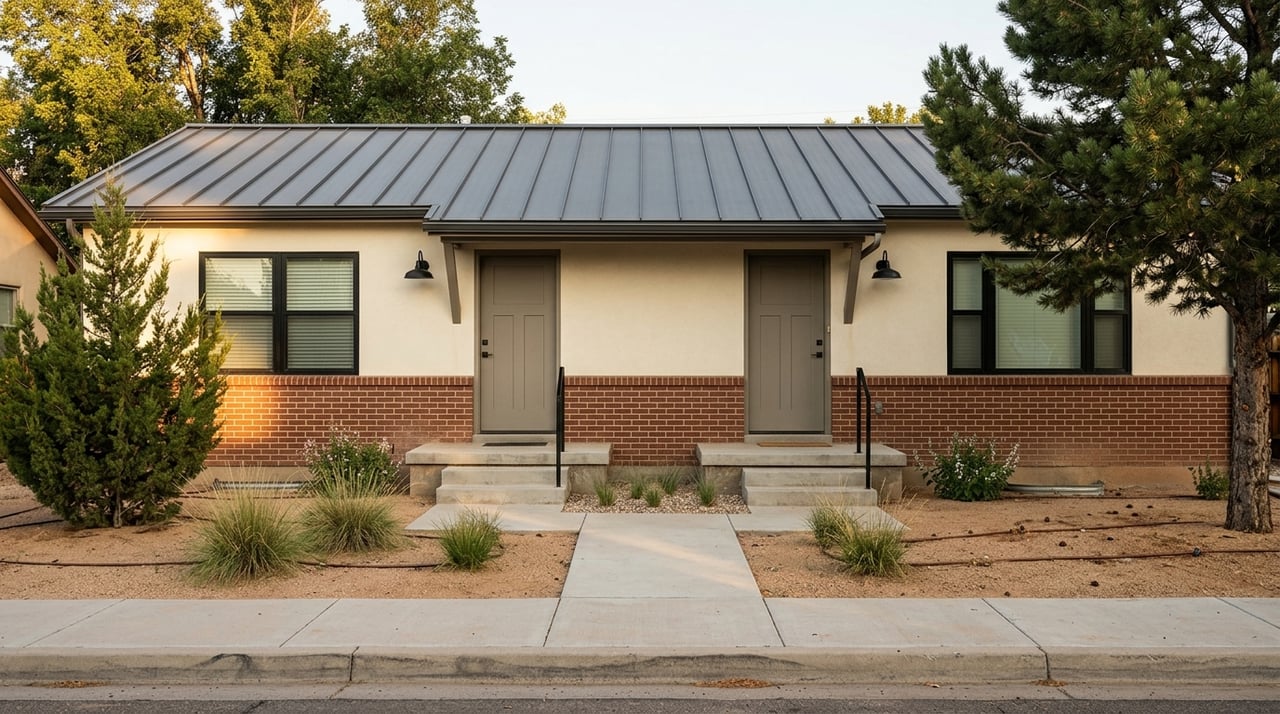
Fruitvale CO House Hacking: Make a Duplex Work
April 16, 2026
April 16, 2026
Thinking about buying a duplex in Fruitvale and letting the second unit help carry the payment? That idea can make sense here, but only if you treat it like both a home purchase and a small business decision. If you want to know what house hacking really looks like in Fruitvale, what numbers to watch, and what legal checks matter before you buy, this guide will help you think it through clearly. Let’s dive in.
House hacking usually means you live in one part of a property and rent out the other part to help offset your housing costs. In the duplex version, the setup is straightforward: you occupy one unit and lease the second unit.
The IRS specifically recognizes this kind of arrangement as a split-use property in Publication 527. That matters because the property is part personal residence and part rental, which affects how you think about income, expenses, and taxes from day one.
Fruitvale sits between Grand Junction and Clifton, and it remains a heavily owner-occupied area. According to the Mesa County community profile, Fruitvale had 3,332 households, a 2023 median income of $76,339, and 7.7% renter households.
Even with that owner-occupied base, local rent levels stand out. Census QuickFacts for Fruitvale shows a median gross rent of $1,686, compared with Mesa County’s median gross rent of $1,182 in the same source set. That gap helps explain why a rented second unit can make a real difference in your monthly budget.
There is also a practical ownership angle here. Census data shows a median monthly owner cost with a mortgage of $1,427 in Fruitvale, alongside a median owner-occupied home value of $333,100. Those figures do not mean every duplex will cash flow, but they do show why buyers often explore whether one unit’s rent can reduce the pressure of owner occupancy.
Before you get excited about rent, start with cash to close. A rough example from the research: 3.5% down on a $380,000 property is about $13,300, and 3.5% down on $419,900 is about $14,696.50.
That is only part of the picture. The Consumer Financial Protection Bureau says closing costs commonly add another 2% to 5% of the purchase price, so your real upfront cash need is materially higher than the down payment alone.
Here is a simple way to think about it:
If you go into a duplex purchase with only enough cash for the minimum down payment, you may feel stretched fast.
Some owner-occupants look at low-down-payment financing when buying a 2- to 4-unit property. HUD notes that FHA-insured financing can be used on eligible 2- to 4-unit properties, with a minimum required investment of 3.5% in most cases.
Freddie Mac also states that Home Possible may allow down payments as low as 3% for eligible borrowers. The same HUD source in the research also notes that rental income from the other units in a 2- to 4-unit primary residence may help with qualification, which is one reason house hacking stays popular with owner-occupants.
That said, qualification is never automatic. Loan structure, borrower profile, reserves, property condition, and lender overlays all matter, so it is smart to verify how the lender will treat projected rental income before you build your plan around it.
One of the biggest mistakes buyers make is comparing rent to a mortgage payment and stopping there. Duplex ownership is an operating asset, not just a place to live.
HUD’s 2021 Rental Housing Finance Survey summary found a national median monthly operating expense of $380 per rental unit. The same source notes that only 22% of small rental properties with 1 to 4 units are professionally managed, which helps explain why many owner-occupied duplexes function like hands-on small businesses.
When you run the numbers, make room for:
If the math only works in a perfect month, it may not work in real life.
In Fruitvale, one of the most important early questions is whether the specific parcel is actually allowed to function as a duplex. Do not assume that a two-unit layout, old listing language, or a seller’s description settles that issue.
Mesa County’s Land Development Code says the RSF-4 district is intended to accommodate single-family and duplex residential development. It also states that RMF-5, RMF-8, RMF-12, RMF-16, and RMF-24 districts are intended to accommodate duplex and or multifamily development.
That makes parcel-level zoning your first legal filter. Before you count on rental income, confirm the zoning, the legal use, and whether the current improvements match the approved use.
Some buyers assume they can buy one property now and add a second rentable unit later if the duplex plan falls through. In Mesa County, that is not always a workable backup.
The county code says only one attached or detached accessory dwelling is allowed per parcel, requires at least 6,500 square feet, and does not allow ADUs on a lot that already contains a duplex or multifamily dwelling. If the property is inside Grand Junction city limits rather than unincorporated county land, you also need to check the city’s separate ADU resources and rules.
The key takeaway is simple: confirm jurisdiction first, then confirm the exact property rights. A duplex and an ADU are not interchangeable strategies.
If you house hack, you are not just a homeowner. You are also stepping into landlord responsibilities, and Colorado now requires a more formal screening process.
HB23-1099 requires landlords to disclose whether they accept screening reports before collecting information that triggers an application fee. The same research source notes that if a consumer report is used, the landlord must provide a copy and notice of dispute rights.
The research also notes that HB25-1236, effective January 1, 2026, updated portable tenant screening report rules. In addition, the FTC’s landlord guidance explains that tenant consumer reports may include credit, rental history, and criminal history, and that adverse-action notice rules apply when a report contributes to a denial.
A practical approach is to keep your standards relevant, transparent, and written. HUD guidance in the research emphasizes accurate records, clear criteria, and an opportunity for applicants to dispute negative information.
A duplex house hack can help with monthly affordability, but it also creates tax complexity. According to IRS Publication 527, a live-in duplex is split-use property, which means shared costs like mortgage interest and property taxes must be divided between rental and personal use.
The same IRS source says depreciation applies only to the rental portion. It also explains that depreciation allowed or allowable reduces your basis and can affect taxable gain when you eventually sell.
That is why your exit plan should start before you buy, not years later. If you expect to refinance, move out, or sell after building equity, ask a qualified tax advisor how the rental side may affect the future transaction.
House hacking is often framed as a fast path to financial flexibility. In reality, it is usually a long-term equity-building strategy, not an instant cash machine.
The CFPB cautions that money tied up in a home is not immediately liquid. The same source notes that home equity loans and HELOCs usually require several years of ownership and meaningful equity, so it is better to think in terms of steady balance-sheet improvement rather than quick access to cash.
That mindset matters in Fruitvale. If your goal is to reduce your monthly out-of-pocket cost, build ownership over time, and keep a second unit producing income, a duplex may be worth serious consideration. If your goal is immediate passive income with little management, the reality may feel very different.
Before you make an offer, work through these items:
A disciplined checklist can keep a promising idea from becoming an expensive assumption.
In a market like Fruitvale, the right duplex is less about hype and more about process. You want to evaluate zoning, financing, operating costs, and long-term flexibility with the same care you would bring to any investment decision.
That is especially true when market snapshots vary by source. The research notes that Realtor.com and Redfin have reported different directional figures for inventory, listing prices, sale prices, and days on market because they measure different windows and listing-versus-sold data. That is useful context, but it also reinforces the need for property-specific analysis instead of broad assumptions.
If you are considering house hacking in Fruitvale, GSD Broker Team can help you look at the opportunity through a valuation-first lens, so you can weigh the homeownership benefits, income potential, and property-level realities before you commit.
Stay up to date on the latest real estate trends.

Whether you are looking for business acquisitions, commercial investment or your dream home in Mesa County or surrounding areas, we’re here to help you move forward with clarity and confidence.