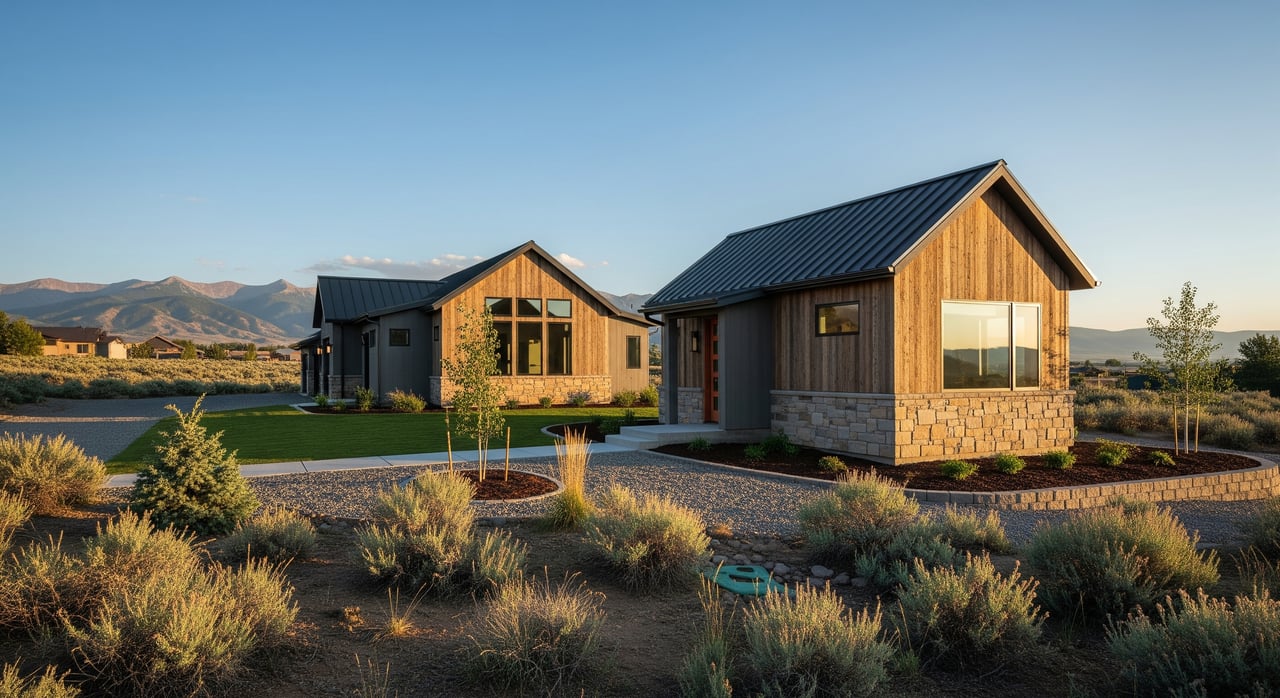
Montrose ADU Design Rules for Lot Fit & Compliance
October 16, 2025
October 16, 2025
Is an accessory dwelling unit the right fit for your Montrose property? You might want space for family, a future rental, or a smart way to add value, but zoning and site limits can feel murky. This guide breaks down how ADUs fit on typical lots in Montrose and Montrose County, what rules apply, and which local programs can save time and money. You will also get a quick checklist to test your lot before you spend on design. Let’s dive in.
Montrose allows one ADU per lot. ADUs can be internal, attached, or detached, including over a garage. They must include a kitchen, a bathroom, and a separate entry.
The city notes that mobile homes, manufactured homes, park models, and travel homes are not allowed as ADUs. Review the city summary of ADU rules for the latest details in plain language on size, parking, and other basics. See the city’s overview in the CivicAlerts update.
City materials show ADUs must be between 200 and 1,000 square feet, with exceptions in certain areas. Colorado’s statewide framework sets minimum ADU rights in many places, so it is smart to understand both the state baseline and local code. You can read the statewide context in the DOLA ADU guidance on HB24-1152 and local implementation.
ADUs must follow accessory structure rules for setbacks and height in the underlying zone. In the downtown-focused REDO area, the city allows reduced setbacks that can make small lots viable. Parking is typically one additional off-street space for an ADU, with reductions possible in certain downtown zones. Find the local summary in the city’s CivicAlerts update.
The Redevelopment Overlay District, or REDO, is designed to support modest infill near downtown. It allows reduced setbacks, smaller minimum lot sizes, and a combined water and sewer connection fee noted by the city at $300 when the ADU is on the same deeded lot. Always confirm current fee schedules with the City before budgeting.
If you own a small lot, REDO may open the door for a detached cottage or an over-garage unit that would not fit elsewhere. Explore the city’s REDO details and map on the REDO program page.
If you are on city water and sewer, plan for a reduced combined connection fee when your ADU stays on the same deeded lot. If you are creating a separate parcel, full tap and investment charges typically apply. The REDO page outlines how local tap savings can affect your upfront costs.
Your site plan should show where the ADU will tie into utilities, as well as driveway and parking layouts. The City’s Building Services page explains submittals and inspections. Review Montrose permitting resources on Building Services and the city’s Documents and Resources.
For lots in unincorporated Montrose County, county planning and building rules apply. Septic and well capacity often drive feasibility, and a septic upgrade may be required for an ADU.
Expect different setback, lot coverage, and access standards than inside the city. Start early with the County’s Planning and Development team through the Planning & Development page.
City materials indicate ADUs built after January 1, 2025 cannot be used as short-term rentals. If you plan to host guests, confirm the ADU restriction and separate licensing and tax rules before you design. The city’s ADU and program materials are posted under Documents and Resources.
Montrose offers pre-approved ADU plans that can shorten design time and simplify review. Examples include “The Retreat” at 609 square feet, “The Perch” at 648 square feet with a garage, and “The Loft” at 900 square feet.
Even with a pre-approved plan, you will still submit a site plan, utility plan, and engineered foundation and framing documents. See the city’s menu and submittal guidance under Pre-Approved ADU Program.
With a complete submittal and a pre-approved plan, review can move faster. Construction for a detached ADU commonly runs 3 to 9 months, depending on contractor availability, weather, and site conditions. The city outlines steps and contacts on Documents and Resources.
Site work and foundations can swing budgets the most, especially if grading, drainage, or retaining walls are needed. Utility connections and meter work also add costs, though city-served lots may benefit from reduced tap fees when the ADU is on the same deeded lot.
Interior finishes and energy systems influence the final price and schedule. If you are on septic, be ready for possible system upgrades that affect both cost and timeline. See local program notes on the REDO page.
Colorado’s DOLA has launched an ADU Grant Program for supportive jurisdictions, with early funding rounds beginning in 2025. The state also coordinates with CHFA for homeowner financing options tied to ADU initiatives.
Ask the city whether any grant-funded resources, fee reductions, or pre-approved plans are available at the time you apply. Learn more on DOLA’s ADU Grant Program.
You want your ADU to fit your lot, your budget, and your long-term plan. Our team combines residential and land expertise with valuation-forward advice so you can weigh the impact of an ADU on purchase decisions, resale value, or rental strategy.
If you are buying, we help you target properties and zones that support your ADU goals. If you are selling, we help you position ADU potential in the market. For straight answers on Western Colorado properties and ADU feasibility, connect with the GSD Broker Team.
Stay up to date on the latest real estate trends.
Whether you are looking for business acquisitions, commercial investment or your dream home in Mesa County or surrounding areas, we’re here to help you move forward with clarity and confidence.