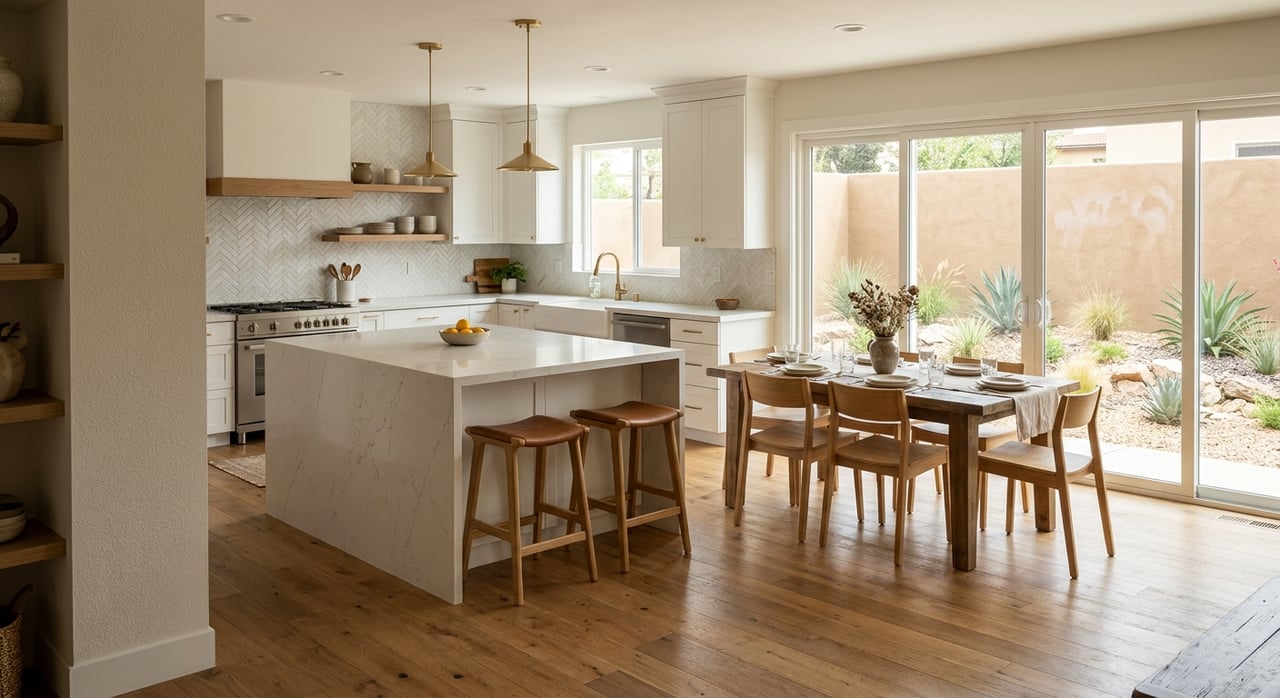
Delta’s Residential Market Overview For Move‑Up Buyers
July 23, 2026
July 23, 2026
Wondering whether moving up in Delta still makes sense when prices, inventory, and timing all seem to pull in different directions? If you already own a home and want more space, a better layout, a larger lot, or a newer ranch-style property, you need more than a headline number. You need a clear read on what the Delta market actually looks like for move-up buyers right now. Let’s break it down.
Delta looks best as a range, not one exact number. Different data sources use different methods, and for this market that matters.
Recent market reports place Delta’s median sale or sold price roughly between $364,032 and $375,000, while median listing price sits around $404,751. Median days on market are also fairly close across sources, landing around 48 to 50 days.
That mix points to a market that is close to balanced. Buyers appear to have some room to negotiate, but homes that are priced well and show well can still move at a steady pace.
For many Delta homeowners, a move-up purchase means selling from the low-to-mid $300,000s and buying into the mid-$400,000s to low-$500,000s. That range is where you are more likely to find added square footage, updated interiors, larger lots, or newer ranch-style homes.
That framing fits both the current listing mix and the local annual market report. In practice, the jump is often less about luxury and more about function, comfort, and long-term fit.
The local data supports that story. Delta city’s median sales price reached $345,000 in 2024, and the $350,001-and-above price band had the most closed sales along with the strongest year-over-year sales growth.
At first glance, Delta does not look severely undersupplied. The 2024 local REALTOR report showed 3.5 months of supply in Delta city, with 264 new listings, 197 closed sales, and 58 homes for sale.
Countywide figures were somewhat broader, and listing portals in 2026 showed more active inventory. Realtor.com reported 142 homes for sale, which suggests buyers have choices.
Still, move-up buyers often feel inventory is thinner than the headline numbers suggest. One big reason is home size. In 2024, homes 1,500 square feet and below made up 47.7% of Delta’s market share.
That means a large share of available housing may not match what you are trying to buy next. If you want a larger floor plan, better storage, an extra bedroom, or a more updated single-level layout, your true options may be narrower than the overall listing count implies.
If your goal is to move up, it helps to focus on the price bands where inventory is actually showing up. Current listings reflect a practical ladder that starts around the high $300,000s and stretches into the $500,000s.
Examples in the current mix include homes listed near $394,500, $435,000, $519,000, and $524,900. Higher-priced options also exist, including larger homes and acreage properties, but the mid-$400,000s to low-$500,000s appear to be the most relevant zone for many move-up buyers.
This matters for planning. If your current home would likely sell near Delta’s recent median range, you may need to think carefully about down payment strength, sale proceeds, and how much monthly payment change feels comfortable.
Delta is not a market where every home flies off the shelf in a weekend. It is also not a market where you can assume every seller will accept a deep discount.
Sale-to-list ratios reported near 98% to 99% suggest many homes still trade fairly close to asking price. At the same time, marketing times near 43 to 50 days show that buyers often have time to evaluate a property carefully.
For move-up buyers, that creates a useful middle ground. You may be able to negotiate on price, repairs, credits, or timing, especially when a listing has been sitting longer than the market norm.
One of the clearest takeaways in Delta is that averages do not tell the whole story. Some homes move in a normal window, while others linger much longer.
Recent sold examples show that spread clearly. One home sold in 44 days at 1% under list, while another sold in 92 days at 2% under list. Others took 170 days and even 304 days, with the longest example closing at 20% under list.
That does not mean every older listing is a bargain. It does mean timing is highly property-specific in Delta.
If a home is updated, priced correctly, and fits what buyers want, it can still move quickly. If it is unusual, overpriced, or needs work, you may have more negotiating room and more time to make a decision.
Delta’s housing stock is part of what makes moving up here interesting. The city was established in 1882, and older in-town homes remain part of the market story.
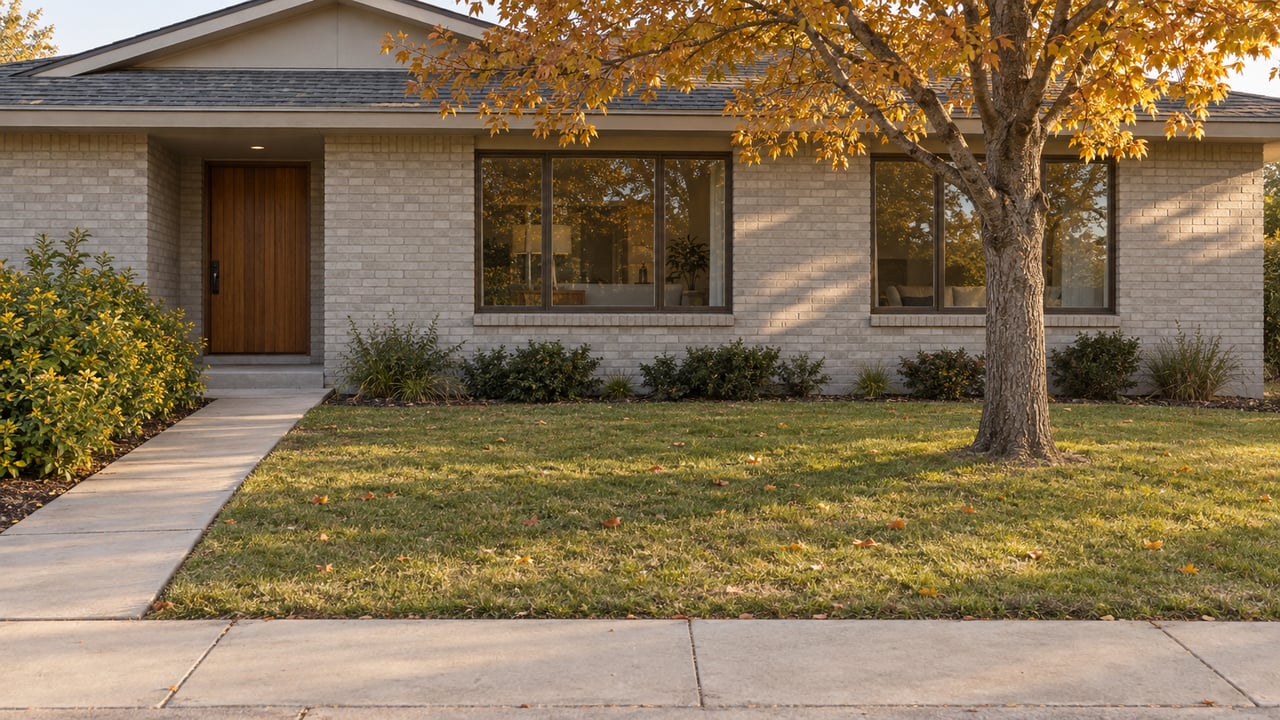
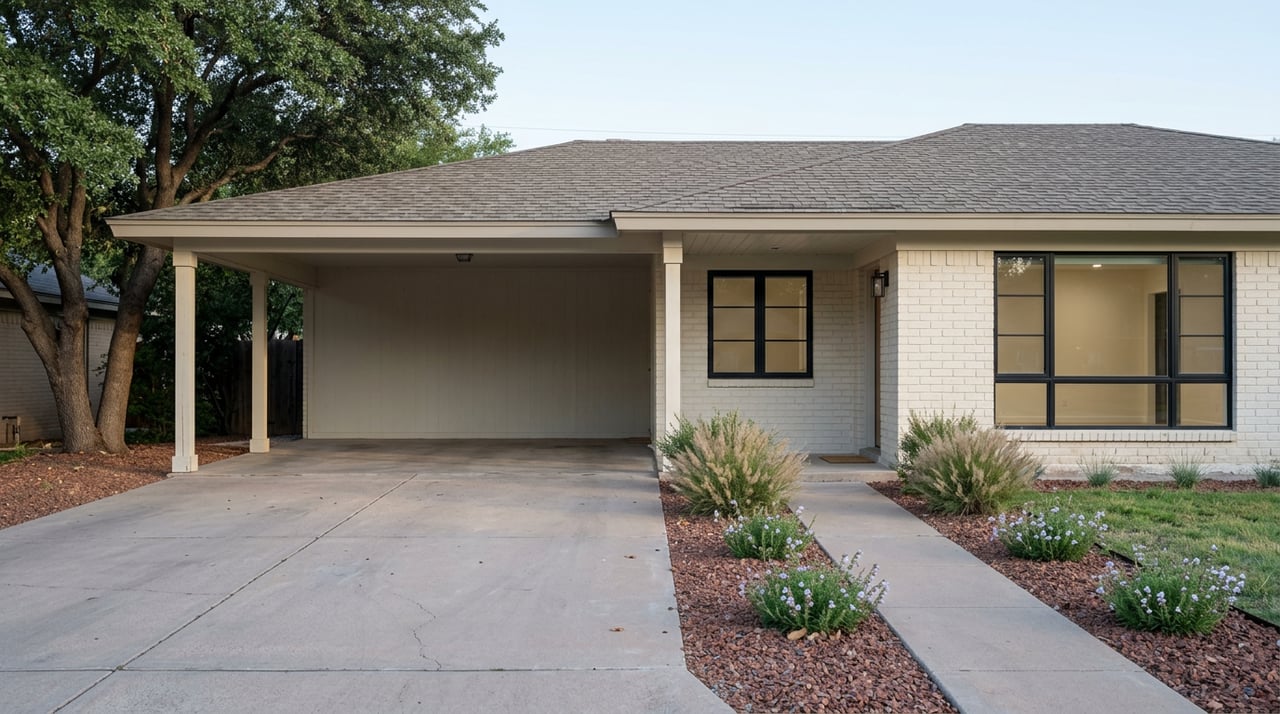
You will see a mix of housing types rather than one dominant format. Current and recent listings point to historic bungalows, Craftsman-era homes, and ranch-style homes.
For example, one Delta listing is described as a 1908 Craftsman-style bungalow, while other listings are clearly ranch-style properties. City permit activity from late 2025 also shows new single-family homes and manufactured-home placements, which adds to the range of available housing.
For move-up buyers, that usually means your choices fall into three practical buckets:
Each option comes with a different tradeoff in age, maintenance, lot size, and layout. The right fit depends on how you want to live now, not just how many square feet you want on paper.
A smart move-up plan starts with your current home’s likely value and a realistic target for your next purchase. In Delta, that means looking at your existing home through today’s local price range, then comparing it to the tighter pool of larger or more updated homes that fit your next stage.
You also want to think about timing on both sides of the move. Because Delta is relatively balanced, you may have more flexibility than in a fast-moving seller’s market, but the best-fit homes can still attract attention quickly.
That is why a valuation-first approach matters. When you know what your current home could likely command, what move-up inventory is actually available, and where negotiation room may exist, you can act with more confidence and less guesswork.
For move-up buyers, Delta offers opportunity, but it rewards preparation. The market appears balanced enough to create openings, yet selective enough that the right homes do not always stay available for long.
If you are looking to trade up from the low or mid-$300,000s into the mid-$400,000s or low-$500,000s, focus on real inventory, not just broad averages. Look closely at home size, style, condition, and days on market.
When you pair that local context with a disciplined pricing strategy for your current home, you put yourself in a much better position to move when the right property appears. If you want a clear, data-driven view of your options in Delta, connect with the S.U.R.E Team for practical guidance and a valuation-led plan.
Stay up to date on the latest real estate trends.

Whether you are looking for business acquisitions, commercial investment or your dream home in Mesa County or surrounding areas, we’re here to help you move forward with clarity and confidence.